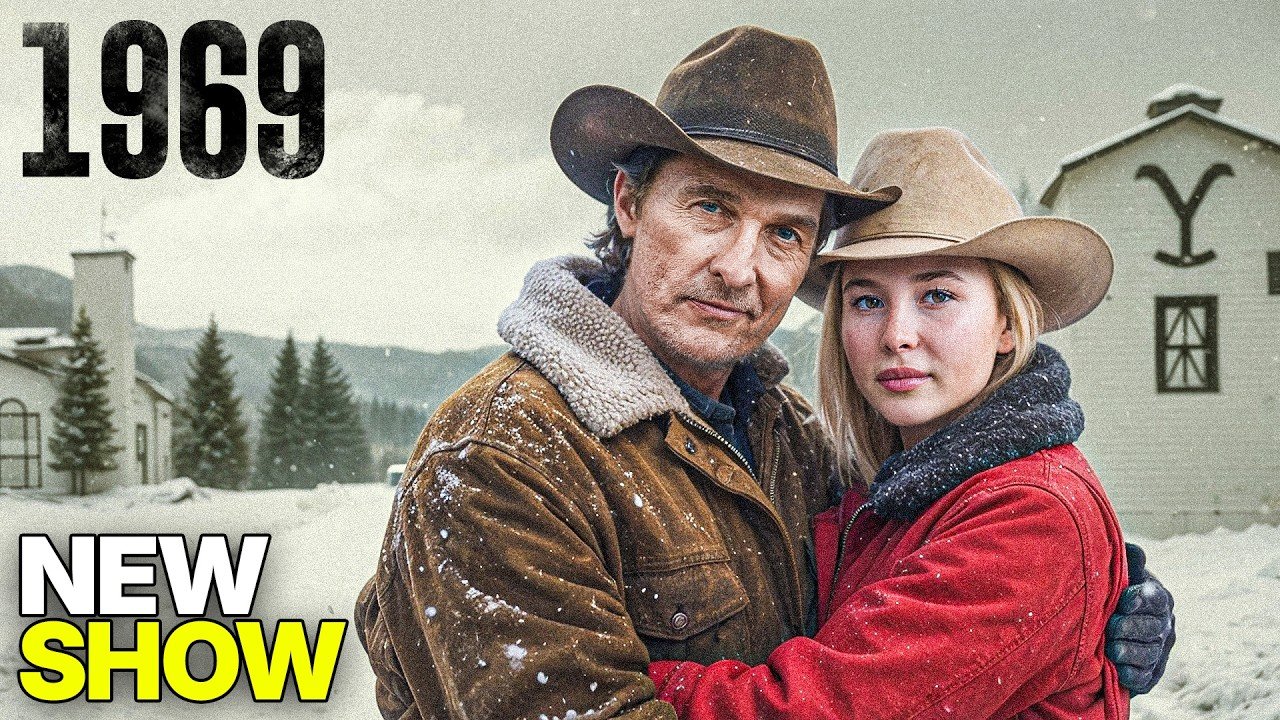
In 1969, the Dutton family stood at a crossroads, their vast Montana ranch caught between tradition and transformation. As portrayed in the Yellowstone universe, this pivotal year marks a generational shift—where old codes of honor confront the changing realities of modern America.
A Changing West
The American West of 1969 was no longer the untamed frontier of earlier decades. Development was creeping steadily across Montana, corporations were eyeing valuable land, and cultural shifts were reshaping rural communities. For the Duttons, whose identity was forged in hardship and sacrifice, preserving their ranch meant adapting without surrendering their core values.
The legacy established by earlier generations—depicted in companion series like 1883 and 1923—weighed heavily on the family. By 1969, the ranch was not merely property; it was history, pride, and survival intertwined.
A New Generation Steps Forward
As older family members began to relinquish control, younger Duttons were forced to step into leadership roles. They inherited not only land, but conflicts—longstanding disputes with neighboring ranchers, tension with government authorities, and the constant threat of losing pieces of the empire to economic pressures.
Unlike their ancestors, who fought with rifles and grit, this generation faced legal battles, political maneuvering, and the expanding influence of corporations. The struggle for the ranch was becoming less about open range warfare and more about contracts, regulations, and strategic alliances.
Tradition vs. Modernity
1969 symbolized more than a date; it represented a cultural turning point. The broader American landscape was shifting with civil rights movements, anti-war protests, and generational rebellion. Even in Montana, these currents were felt. The Dutton ranch, long a bastion of strict hierarchy and tradition, could not remain untouched by the winds of change.
The younger Duttons grappled with questions their forebears never had to consider: How much land is enough? What is worth sacrificing to hold onto legacy? And can power be maintained without losing one’s moral compass?
The Weight of the Brand
Central to the Dutton identity was loyalty—symbolized by the ranch’s brand. In 1969, that symbol carried both pride and burden. It bound cowboys and family members alike to a code of silence and sacrifice. Yet as society evolved, the cost of that loyalty became more complicated.
The ranch hands remained the backbone of the operation, their lives tied to the rhythms of cattle drives and harsh winters. But uncertainty loomed, and the sense of inevitability that once defined the Dutton rule began to feel fragile.
A Legacy Reinforced
Though challenged by economic pressures and social change, the Duttons of 1969 did not retreat. Instead, they recalibrated. They fortified alliances, strengthened internal bonds, and prepared for a future that would demand resilience in new forms.
This era set the stage for the powerful dynasty later depicted in Yellowstone. The struggles of 1969 sharpened the family’s resolve and deepened the scars that would shape future generations.
In the end, 1969 was not the decline of the Dutton legacy—it was its transformation. The ranch endured, not because it resisted change entirely, but because it learned to fight on new ground.
Final Word
The year 1969 stands as a defining chapter in the broader saga of Yellowstone—a moment when the Dutton legacy was neither broken nor unchallenged, but reforged. Faced with social upheaval, economic pressure, and the steady march of modernization, the family proved that survival in the West was no longer just about strength on horseback—it required strategy, unity, and an unshakable belief in their heritage.
The Duttons did not simply defend land; they defended identity. And in doing so, they ensured that their empire would endure into the generations that followed, scarred but stronger, rooted in the past yet prepared for the battles ahead.