
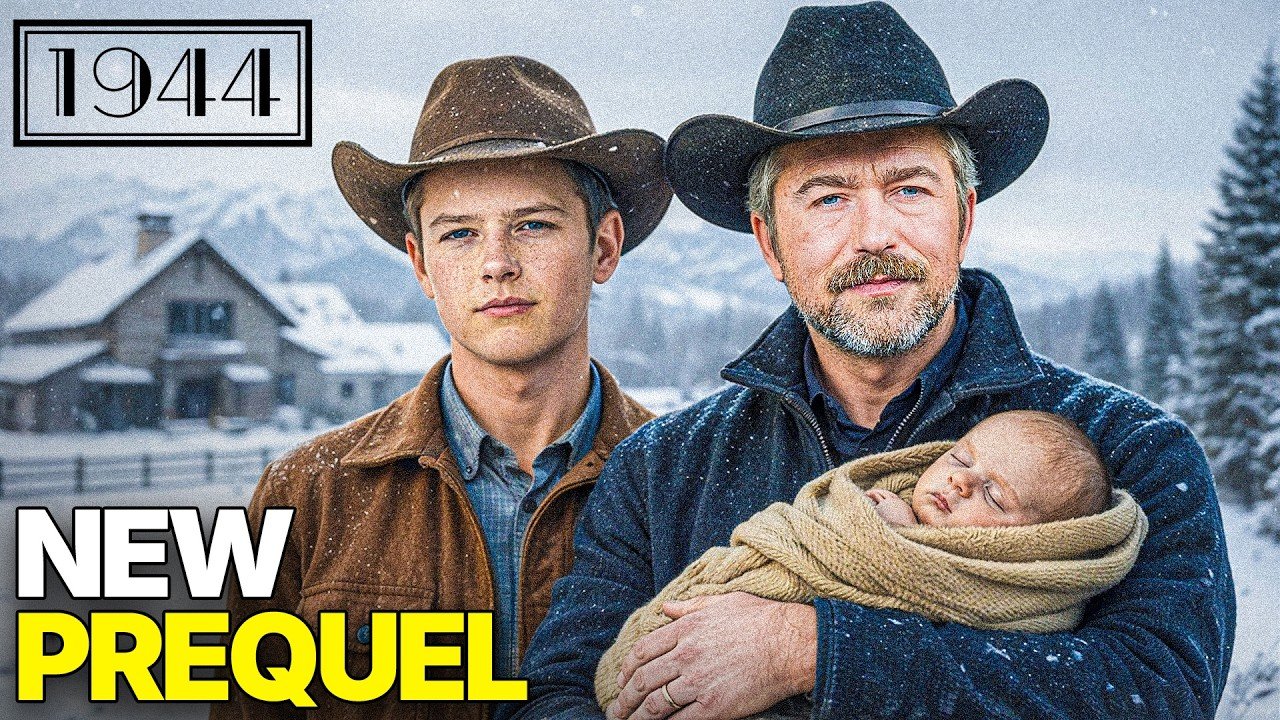
The world of Yellowstone is expanding once again, and this time it’s taking us deeper into the rugged past of the Dutton family. The newly released trailer for Yellowstone 1944 has fans buzzing with excitement, promising a darker, more emotional, and high-stakes chapter in the ever-growing saga created by Taylor Sheridan. Following the success of Yellowstone, 1883, and 1923, this new installment looks ready to deliver another powerful story about survival, sacrifice, and the fight to protect the ranch.
A War-Torn America Meets the Wild West
Set during the final years of World War II, Yellowstone 1944 blends global conflict with the deeply personal battles faced by the Dutton family back home in Montana. The trailer opens with sweeping shots of snow-covered mountains, cattle grazing under gray skies, and the familiar yet haunting image of the Yellowstone ranch standing tall against the storm.
But peace is nowhere to be found.
With young men heading off to war and uncertainty gripping the nation, the Dutton ranch faces threats from every direction—corporate greed, land disputes, and internal family tension. The trailer hints that the war overseas may not be the only battlefield that matters.
A New Generation of Duttons
One of the most exciting elements teased in the trailer is the introduction of a new generation of Duttons struggling to carry the family legacy forward. While previous prequels focused on pioneers and early settlers, 1944 centers on heirs caught between tradition and change.
There are glimpses of emotional farewells at train stations, tense dinner table confrontations, and quiet but powerful moments of reflection. The trailer suggests that leadership of the ranch may shift in unexpected ways as older figures confront mortality and younger family members are forced to grow up fast.
The Dutton motto remains clear: protect the land at all costs.
Yellowstone 1969 Trailer 2026: First Look Reveals a Turbulent New Chapter in the Dutton Legacy
Stunning Cinematography and Raw Emotion
If the trailer proves anything, it’s that the visual storytelling remains as breathtaking as ever. The sweeping Montana landscapes are both beautiful and brutal, mirroring the emotional weight carried by the characters.
Dramatic music builds as scenes of cattle drives, horseback chases, and violent confrontations flash across the screen. There’s a rawness here—less polished, more desperate. It feels grounded in reality, capturing the fear and uncertainty of a country at war.
The emotional depth also stands out. Tearful goodbyes, whispered promises, and hard decisions suggest this series will explore not just physical survival, but emotional endurance.
Themes of Loyalty, Sacrifice, and Survival
At its core, Yellowstone 1944 appears to double down on the themes that have defined the franchise:
-
Family loyalty above all
-
Land as identity
-
Power struggles and betrayal
-
The cost of legacy
The war backdrop adds a powerful layer. For the Duttons, defending their ranch becomes symbolic of defending their way of life. The trailer hints that some characters may return from war changed forever—if they return at all.
A Worthy Successor to the Yellowstone Saga
After the massive impact of Yellowstone and its prequels, expectations are sky-high. But if the trailer is any indication, 1944 is more than ready to rise to the challenge.
The tension feels sharper. The stakes feel heavier. And the emotional weight seems stronger than ever.
Fans of the franchise can expect political intrigue, intense family drama, and explosive confrontations—all wrapped in the cinematic style that has made the Yellowstone universe a cultural phenomenon.
Final Thoughts
The Yellowstone 1944 trailer is nothing short of amazing. It promises heartbreak, heroism, and hard-fought battles on both foreign soil and the Montana frontier. With powerful performances, breathtaking visuals, and the signature storytelling style of Taylor Sheridan, this new chapter could become one of the most compelling entries in the entire saga.
If this trailer is just the beginning, then the Dutton legacy is far from over—it’s about to reach one of its most dramatic turning points yet.